The Best Pomodoro Length in 2026: 25 vs 50 vs 90 Minutes (Research-Backed)
What's the best Pomodoro length in 2026? Research shows 25, 50, and 90-minute intervals each fit different tasks. Here's how to choose the right one.

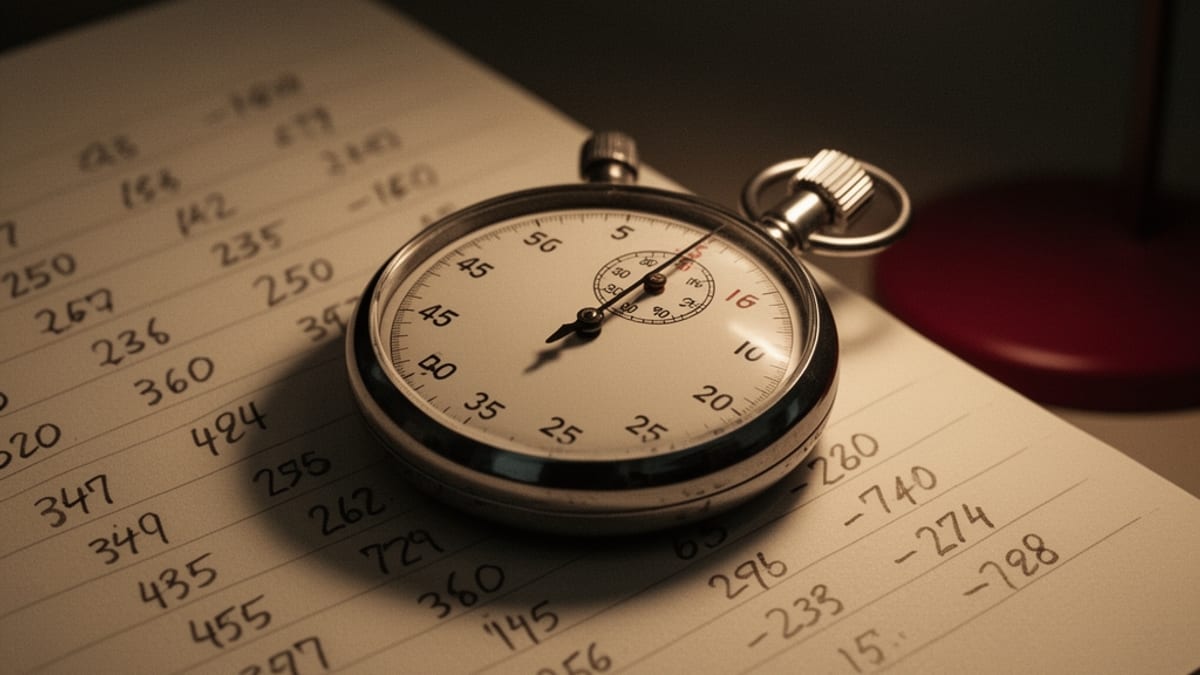
You're 18 minutes into a tricky piece of work. Maybe it's a technical SEO audit, a chapter draft, or a bug that only appears when three conditions line up. You've finally stopped fidgeting. The noise drops away. Then your timer goes off.
That moment is the whole problem.
For years, the default advice has been simple: work 25 minutes, break 5. It's clean, memorable, easy to teach. But if your day includes real knowledge work, not just clearing messages and ticking off admin, the classic 25-minute Pomodoro can start to feel less like a productivity system and more like a trap.
The better question isn't "What's the best Pomodoro length?" It's "What's the best length for this task?"
That shift matters. Short intervals can be excellent for low-complexity work. Mid-length blocks often fit sustained office work better. And when you need true deep work, 90-minute sessions have stronger backing than most Pomodoro articles admit.
Why the Traditional 25-Minute Pomodoro is Failing Modern Knowledge Workers
The original Pomodoro method still has value. I use it. But I don't use it for everything, and that's where most advice goes wrong.
The "Flow Interruption Penalty" of the 25-minute alarm
The hidden cost of a 25-minute timer isn't the break itself. It's the interruption landing at exactly the wrong time.
Research cited by Harvard Business Review notes that entering a flow state typically takes 10 to 15 minutes of focused attention [Source: HBR, 2014]. If that's true, a 25-minute session gives you only 10 to 15 minutes of your best cognitive work before an alarm cuts in. The structure may be clipping your highest-value minutes.
The American Psychological Association also highlights the cognitive cost of switching. Even brief mental blocks and task switching can reduce productive time significantly, in some cases by as much as 40% [Source: APA]. A timer going off isn't the same as checking social media, but it's still a forced context shift. You move from solving to deciding: Keep going? Stop now? Write down your place? Stand up? That friction is real.
For complex tasks, there's a loading period. You assemble constraints, data points, dependencies, exceptions. You hold the structure in working memory. That process can easily eat the first chunk of the session. So when the bell rings at minute 25, it often doesn't protect your focus. It punctures it.
That's the flow interruption penalty. If your task has layers, branches, and ambiguity, 25 minutes is often too short for meaningful depth.
Why 25 minutes is still perfect for "shallow work" (emails, admin, Slack)
Now the other side. The 25-minute Pomodoro is still great for work that benefits from boundaries more than immersion.
Think inbox cleanup. Slack catch-up. CRM updates. Expense reports. Scheduling. Basic follow-ups. Small tasks that expand if you let them.
Here, the timer helps because it creates urgency and keeps low-value work from swallowing your day. You don't need 15 minutes to enter flow for these tasks. In many cases, flow isn't even the goal. Completion is.
Short breaks are also well supported. Research in Scientific Reports found that micro-breaks can mitigate cognitive fatigue and help restore attention [Source: Nature Scientific Reports, 2021]. That supports the logic behind 25/5 or 50/10 cycles, especially when the work is repetitive or mentally lighter.
So no, the 25-minute Pomodoro isn't obsolete. It's just overprescribed.
The 50-Minute Pomodoro: The Sweet Spot for Sustained Focus?
If 25 minutes can be too short for complex work and 90 minutes can be too long for some days, 50 minutes often lands right in the middle.
The 52/17 rule and what productivity tracking data shows
One of the more cited alternatives is the 52/17 pattern. DeskTime analyzed data from 5.5 million computer users and reported that the most productive 10% tended to work for 52 minutes followed by a 17-minute break [Source: DeskTime].
That doesn't prove 52 minutes is a universal law. But it suggests something useful: productive people often work in chunks longer than 25 minutes and then take real breaks.
This fits how many modern jobs actually work. Fifty-ish minutes gives you time to settle in, make progress, and reach a natural stopping point without the harshness of a very long block. For writing, analysis, planning, slide building, or focused review, it often feels long enough to matter but short enough to repeat several times a day.
If you've tried 25/5 and felt rushed but 90-minute sessions sound intimidating, 50/10 or 52/17 is often the best place to test.
Balancing deep focus with the biological need for physical movement
There's another reason 50-minute blocks work well. Your brain may want continuity, but your body still needs movement.
Long periods at a desk can dull your attention even when your intentions are good. A 10- to 17-minute break gives you enough room to actually reset. Stand up. Walk. Refill water. Look at something that isn't a screen. Shorter breaks can help, but they often turn into "scroll for four minutes and sit back down," which isn't quite recovery.
The micro-break research supports the broader idea that breaks restore attention [Source: Nature Scientific Reports, 2021]. In practice, this is where 50-minute sessions shine. They preserve momentum while making room for physical reset before fatigue builds too far.
For a lot of office work, that balance is hard to beat.
The 90-Minute Session: Ultradian Rhythms and Deep Work
This is where the conversation usually gets fuzzy online. People mention 90-minute focus blocks as if they're just another productivity hack. They're not. There's a stronger biological and performance case behind them.
The neuroscience of the 90-minute Basic Rest-Activity Cycle (BRAC)
Human energy isn't flat. It rises and falls in cycles. The concept often referenced here is the Basic Rest-Activity Cycle, or BRAC, which describes recurring periods of higher and lower alertness throughout the day. In practical terms, many people can sustain deep concentration for around 90 minutes before their focus quality starts slipping.
That doesn't mean every block must be exactly 90 minutes. It means your brain may be better suited to deeper, longer waves of effort than the standard 25-minute timer allows.
This is especially relevant if your work has a long runway. Coding. Strategic writing. Data modeling. Technical audits. Anything where you need to hold a system in your head and manipulate it without interruption.
A 90-minute block gives you enough time to load the task, enter flow, do meaningful work inside flow, and then step away before mental quality drops too far. That's a very different experience from hitting flow right as a timer tells you to stop. If you want to understand how these ultradian rhythm work cycles map to your day, the biology behind them is worth exploring directly.
Anders Ericsson's research on elite performers and deliberate practice
The case for longer blocks also shows up in performance research. Anders Ericsson's foundational work on deliberate practice found that elite performers tend to organize demanding practice into uninterrupted sessions, often around 90 minutes [Source: Psychological Review, 1993].
These weren't random workers chasing inbox zero. They were people building expertise: musicians, athletes, writers. People doing cognitively expensive work on purpose.
That matters because deep work and deliberate practice share something fundamental. Both require sustained attention at the edge of your ability. Both suffer when interrupted. Both improve when the session is long enough to get past warm-up and into real effort.
So if you're asking about the best Pomodoro length for studying and deep work, 90 minutes deserves a serious look, not a casual mention.
The "Task-Interval Match" Framework: How to Choose Your Length
Here's the framework I actually recommend. Don't pick one timer for your whole identity. Match the interval to the task in front of you.
High cognitive load (90 mins): Coding, writing, technical audits
Use 90-minute blocks when the task is complex enough that interruption is expensive.
Good candidates:
- Coding and debugging
- Long-form writing
- Technical SEO audits
- Financial modeling
- Strategy work
- Deep studying
- Architecture or systems planning
These tasks have a high setup cost. You need time to gather the moving parts, hold them together, and work through them without constantly reorienting.
I figured this out the hard way running technical SEO audits for e-commerce clients. These aren't quick glance-at-a-spreadsheet tasks. You're crawling tens of thousands of URLs, cross-referencing indexation data with server logs, tracking down why Google is ignoring an entire subfolder. For years I tried to do this work in standard 25-minute Pomodoros because that's what every productivity blog told me to use. I'd get maybe fifteen minutes into actually understanding the problem, the timer would fire, and I'd lose the thread. After the break I'd spend another ten minutes just remembering where I was.
When I switched those audits to 90-minute blocks, the difference was immediate. Not because I worked longer overall, but because I stopped paying that re-entry tax over and over. One unbroken session where I could hold the full picture of a site's architecture in my head was worth more than three chopped-up 25-minute rounds. I still use shorter intervals for other things, but for anything where the setup cost is high, forcing a break every 25 minutes is just donating your focus to a timer.
If you regularly feel like you're "just getting into it" when the timer rings, that's the clearest sign you need a longer block. Try 90 minutes of focus followed by a meaningful break. Not two minutes checking messages. A real reset.
Medium cognitive load (50 mins): Research, reporting, meetings
Use 50-minute blocks for work that needs concentration but not full cognitive immersion.
Good candidates:
- Research and note synthesis
- Reporting and dashboards
- Slide creation
- Meeting prep
- Proposal writing
- Reviewing documents
- One-on-one meetings or interview sessions
This is the zone where 50/10 or 52/17 performs well. You're giving yourself enough time to think without demanding peak depth for an hour and a half.
It's also a strong default if you're unsure. Many people find that 50 minutes is long enough to produce visible progress and short enough to maintain consistency across the day.
Low cognitive load (25 mins): Inbox zero, CRM updates, quick tasks
Use 25-minute blocks for tasks that benefit from urgency and boundaries.
Good candidates:
- Email processing
- Slack catch-up
- CRM updates
- Filing and documentation
- Admin batches
- Expense logging
- Follow-up messages
- Small maintenance tasks
This is where the original Pomodoro shines. You're not chasing flow. You're preventing sprawl. A short timer turns vague admin into a contained sprint, which is exactly what you want.
Batch three 25-minute sessions for shallow work and you can clear a surprising amount without letting it contaminate your deep work hours.
The Shift to "Dynamic Pomodoros" in 2026
The real trend underneath this debate isn't about picking a winner. It's about switching smoothly between all three.
Moving away from rigid, one-size-fits-all timers
A static timer assumes your day is cognitively uniform. It isn't.
You might spend your first block doing deep writing, your second in research, your third in meetings, and your last hour cleaning up email. Why would one interval fit all of that?
That's why rigid Pomodoro systems break down for experienced professionals. The issue isn't discipline. It's mismatch.
Dynamic Pomodoros solve that. You choose the timer based on task complexity, not habit. A 90-minute morning block for deep work. A 50-minute session for reporting after lunch. A 25-minute admin sprint before shutdown. That approach reflects how real work feels: flexible without becoming chaotic.
How TaskPomo allows seamless switching between interval lengths
This is exactly the kind of workflow TaskPomo is built for.
Instead of forcing you into one default cycle, it makes switching between interval lengths frictionless. That matters more than it sounds. If changing from 25 to 90 minutes takes effort, people won't do it. They'll stick with the wrong timer because it's familiar.
The ideal setup is simple:
- Pick 90 minutes for deep, high-load work.
- Use 50 minutes for sustained but moderate-focus tasks.
- Drop to 25 minutes for admin, communication, and cleanup.
When the tool supports that without breaking your rhythm, you stop treating productivity as a fixed doctrine and start treating it as task design. That's a better fit for 2026 work.
Frequently Asked Questions About Pomodoro Intervals
Is it okay to skip Pomodoro breaks if I'm in the zone?
Sometimes, yes. But do it intentionally.
If you're in genuine flow and the break would clearly interrupt valuable work, extending the session can make sense. HBR's discussion of flow makes clear that this state is hard-won and worth protecting [Source: HBR, 2014].
That said, skipping every break is usually a mistake. Fatigue still accumulates. Attention still degrades. The micro-break research exists for a reason [Source: Nature Scientific Reports, 2021].
A practical rule: if you're in the zone, finish the current thought, paragraph, function, or analysis pass, then take the break. Don't stop at a jarring point just because a timer beeped. But don't use "I'm in the zone" as a reason to grind for four hours without moving.
What is the ideal break length for a 90-minute Pomodoro?
A longer work block deserves a longer break.
For a 90-minute session, 15 to 20 minutes is a strong starting point. That lines up with the broader rhythm behind longer focus cycles and resembles the recovery window suggested by patterns like 52/17 [Source: DeskTime].
Use the break to change state. Walk. Stretch. Get water. Step away from the screen. If you spend the whole break half-working through notifications, you won't get much recovery. If the 90-minute block was especially demanding, you may need a little more. That's fine. The goal isn't to worship the timer. The goal is to return with your attention restored.
Today, do this: take the hardest task on your list and give it one timer based on its actual cognitive load, not habit. Use 90 minutes if it's deep work, 50 if it's focused but lighter, 25 if it's admin. Then notice one thing only: whether the timer helped your thinking or interrupted it. That observation will tell you more than a month of using the wrong interval by default.